


 Local Journalism Initiative
Canada’s National Observer: Coastal First Nations are vowing to use every legal tool to stop the proposed Alberta-to-BC pipeline deal and tanker ban changes.
Marilyn Slett, president of the Coastal First Nations-Great Bear Initiative and elected chief of the Heiltsuk Nation, said in a news conference that her nations “cannot support and will not support” the pipeline agreement signed by Prime Minister Mark Carney and Alberta Premier Danielle Smith that would see bitumen shipped from Alberta’s oilsands to BC’s northwest coast.
In a memorandum of understanding (MOU), the federal government has agreed to pause its oil and gas emissions cap and loosen clean-energy rules in Alberta. It might even consider restructuring the federal tanker ban to allow bitumen tankers off BC’s coast — clearing the way for Alberta oilsands crude to be shipped overseas.
“We will never consent to allowing oil tankers in our coastal waters.”
Marilyn Slett, President of the Coastal First Nations-Great Bear Initiative and Chief of the Heiltsuk Nation
The Oil Tanker Moratorium Act, passed in 2019, prohibits tankers carrying more than 12,500 metric tonnes of crude or persistent oil from stopping, loading or unloading at ports and marine installations from the northern tip of Vancouver Island to the Alaska border.
Slett said the tanker ban is non-negotiable and no MOU will change that. “A tanker ban is not a ban if it includes exemptions or carve outs,” Slett said. “We will never consent to allowing oil tankers in our coastal waters.”
Slett said the MOU cannot override their inherent constitutional authority and stewardship responsibilities as rights- and title-holders on the central and north coast and Haida Gwaii.
“By explicitly endorsing a new bitumen pipeline to BC’s coast and promising to rewrite the Oil Tanker Moratorium Act, the federal government is resurrecting one of the most deeply flawed and divisive ideas in Canadian energy politics.”
Stewart Phillip, Grand Chief of Syilx Nation and President of the Union of British Columbia Indian Chiefs
“Any attempt to use a federal–provincial agreement to sidestep Indigenous consent is fundamentally unlawful,” Slett said in a statement released by the Union of British Columbia Indian Chiefs.
The First Nations say they plan to use legal means to challenge the deal.
“By explicitly endorsing a new bitumen pipeline to BC’s coast and promising to rewrite the Oil Tanker Moratorium Act, the federal government is resurrecting one of the most deeply flawed and divisive ideas in Canadian energy politics,” said Stewart Phillip, grand chief of Syilx Nation and president of the Union of British Columbia Indian Chiefs, in a statement.

Philip said British Columbians and First Nations have consistently opposed the presence of crude oil tankers in the Great Bear Sea — an ecologically sensitive marine area along BC’s northern coast. “We will not stand by while the Carney government and Alberta attempt to bulldoze our rights and disregard the catastrophic risks of a spill in the corporate profit interests of the global fossil fuel industry.”
Phillip told Canada’s National Observer on Tuesday that he is willing to face jail time to protect their lands. “I’m prepared to go to jail to defend the rights of my children, grandchildren and great grandchildren … Somebody’s got to stand up for their rights, and it’s certainly not Prime Minister Carney or Premier Smith,” Philip said.
Slett said the nations plan to consider legal options, revisit tactics used against Northern Gateway and use other tools to stop the pipeline. “We will not stop. We will not allow this project to go through,” she said.
Enbridge’s Northern Gateway pipeline project, which was designed to transport oil from Alberta to Kitimat, BC, was ultimately cancelled after a decade-long battle filled with legal challenges and opposition from environmental activists and Indigenous nations.
The deal between Carney and Smith commits Alberta to engage with Indigenous Peoples in both her province and BC, ensuring they have opportunities for equity ownership and various economic benefits from pipeline projects.
“We look at this as the start of a process. We’ve created some of the necessary conditions for this to happen.”
Prime Minister Mark Carney
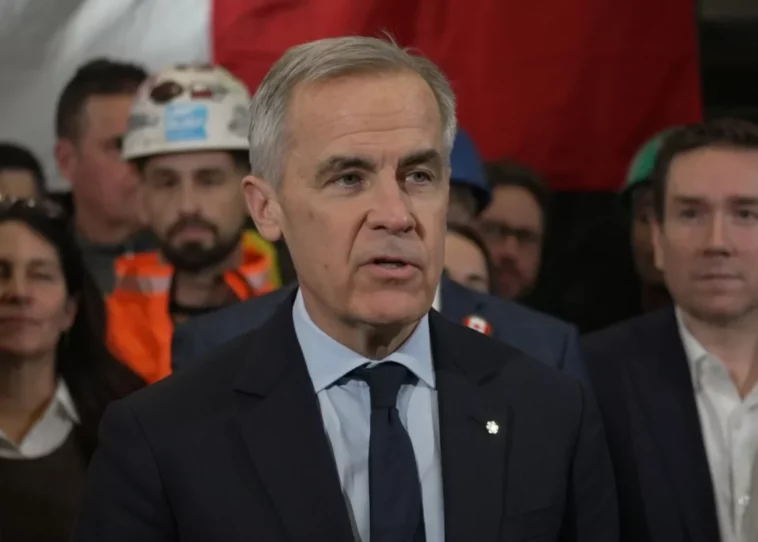
Carney told reporters in Calgary during a meeting with local ironworkers that the MOU does not guarantee the pipeline will be built. He said certain conditions must be met, including securing a private sector proponent, full partnership including equity ownership with Alberta and British Columbia First Nations and ensuring “substantial economic benefits” for British Columbians.
“We look at this as the start of a process. We’ve created some of the necessary conditions for this to happen,” Carney said.
Slett said Coastal First Nations have “zero interest” in co-owning or benefiting from the project. “All it would take is one spill to destroy our way of life,” she said.
“We urge Canada to realize that this MOU is a waste of time, and join us in protecting our precious lands and waters.”
Marilyn Slett, President of the Coastal First Nations-Great Bear Initiative and Chief of the Heiltsuk Nation
Coastal First Nations have worked diligently to protect the environment while supporting the economy, including BC’s tourism and seafood industries, as well as their own ways of life. The tanker ban remains a fundamental part of the conservation-based economy the nations have built over decades on the coast, she said.
Slett said the province of BC had responded to their concerns by signing the North Coast Protection Declaration with Premier David Eby earlier this month.
“We urge Canada to realize that this MOU is a waste of time, and join us in protecting our precious lands and waters,” she said.